Sometimes an emotion is unmistakable. Fear may arrive with a sudden jolt. Anger may appear in the sharpness of a reply. Sadness may bring tears, heaviness or a wish to withdraw.
At other times, the experience is quieter. You may notice that your jaw has been tense all day, that sleep has become restless, that small inconveniences feel unusually irritating, or that your concentration keeps slipping. Something is happening, but it does not yet have a clear name.
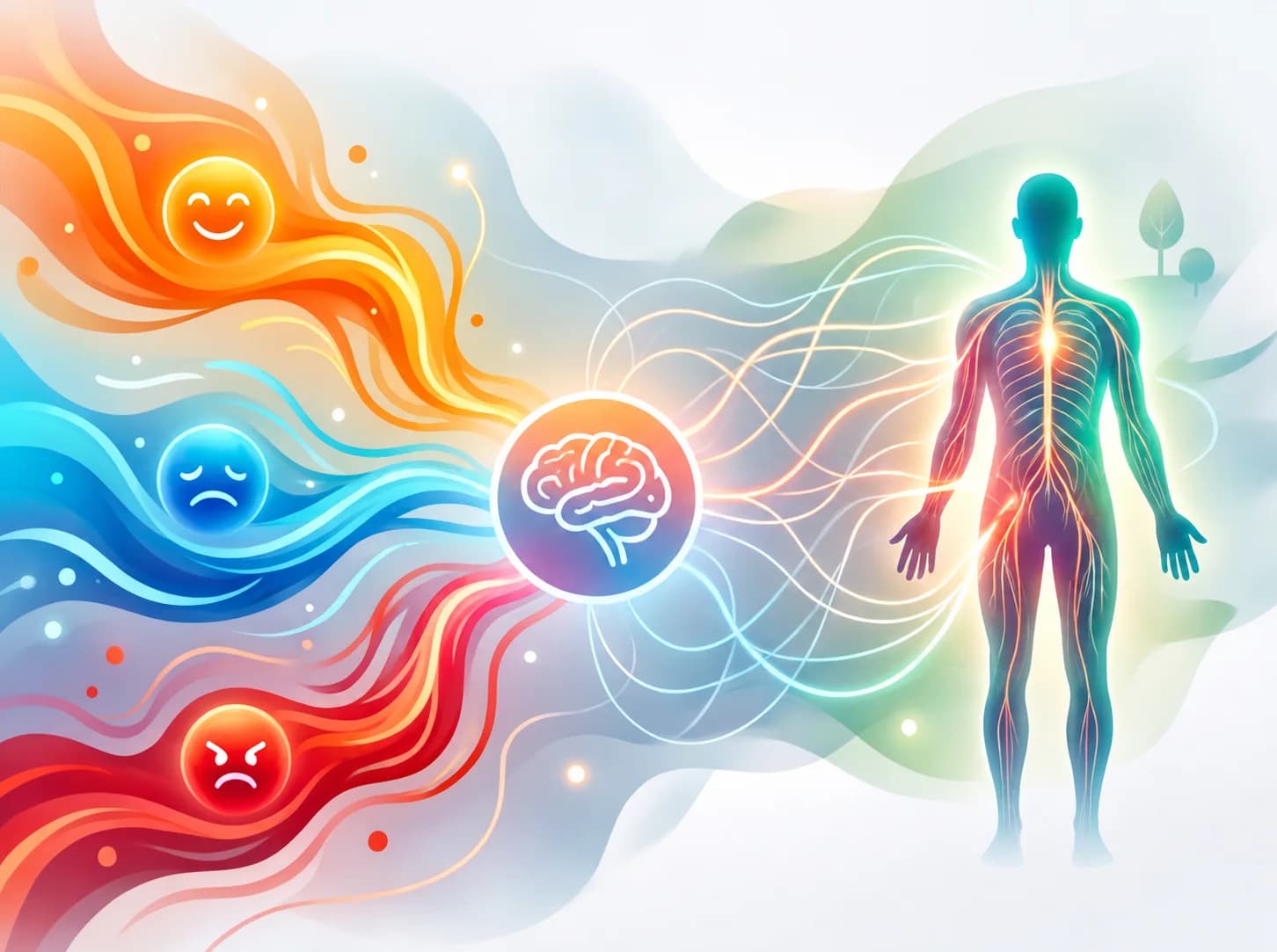
This is one reason emotions can feel confusing. They are not only thoughts. They are not only bodily sensations. They are not simply reactions that should be controlled. Emotions involve changing patterns of attention, meaning, physiology, readiness for action and communication with other people.
Understanding emotions therefore begins with more than asking, “What am I feeling?” It also involves asking: What is happening around me? What meaning am I giving it? What is changing in my body? What response is this emotion preparing me for?
What is an emotion?
There is no single definition of emotion accepted by every researcher. Different theories emphasise different parts of the process. Some focus on evolved response patterns. Others emphasise appraisal, learning, language, bodily signals or the brain’s use of previous experience to interpret the present.
Despite these debates, emotions are widely understood as multi-component experiences. An emotion may include a subjective feeling, changes in attention and interpretation, physiological activity, facial or postural expression, an impulse toward action and a social meaning.
This means an emotion is rarely located in only one place. It is not a thought sitting inside the mind, and it is not a physical object stored inside a tissue. It is a changing experience that emerges through interaction between a person and a situation.
Imagine receiving an unexpected message from someone important. Before you have decided what it means, your attention may narrow, your body may become more alert and several possibilities may enter your mind. The emotion that develops will depend not only on the message itself, but also on the relationship, your expectations, previous experiences and what the situation appears to mean now.
Why do humans have emotions?
Emotions help people respond to events that matter. They direct attention toward opportunities, losses, risks, relationships and possible violations of values or boundaries. They can prepare the body for action, encourage learning and communicate important information to other people.
Fear can increase readiness when danger is possible. Anger may mobilise a response when something feels obstructed, unfair or boundary-crossing. Sadness can accompany loss and adjustment. Disgust supports rejection and protection. Surprise redirects attention toward something unexpected. Joy can reinforce connection, play, exploration and experiences that feel rewarding.
Shame, guilt and embarrassment are often described as self-conscious emotions because they involve evaluation of the self, behaviour or social standing. They may be connected with belonging, responsibility and the wish to repair a relationship, although they can also become painful or disproportionate.
An emotion can serve an understandable function without being accurate in every situation. Fear may be activated by a real danger, an uncertain possibility or a reminder of an earlier experience. Anger may identify a genuine boundary problem, or it may become attached to a misunderstanding. Emotions deserve attention, but they also require reflection.
Emotions are information, not instructions
An emotion changes what seems important in the moment. Fear may draw attention toward threat. Anger may highlight unfairness or obstruction. Sadness may make a loss feel central. Joy may expand interest in connection and exploration.
This shift can be useful, but it may also narrow perspective. Feeling afraid does not prove that danger is present. Feeling guilty does not automatically prove wrongdoing. Feeling angry does not require confrontation or aggression.
Emotional literacy includes learning to separate three related but different processes: the emotion that appears, the meaning given to it and the action chosen in response. The emotion carries information. The response remains open to choice.
This distinction is important because people sometimes judge themselves for the emotion itself. Yet an emotion can appear automatically, while behaviour can still be considered, delayed or changed. Feeling anger and acting aggressively are not the same process. Feeling fear and choosing avoidance are not the same process. Awareness creates a small but meaningful space between experience and response.
How emotions shape attention, memory and decisions
Emotional material often captures attention more strongly than neutral information. This can help a person respond quickly to what matters, but it can also make other information less noticeable.
Under stress or threat, attention may become more selective. A person may focus on possible problems, overlook signs of safety or make decisions mainly to reduce immediate discomfort. In sadness, thoughts may repeatedly return to what has been lost. In anger, attention may become organised around an obstacle, unfairness or violation.
Emotions can also influence what is remembered and how an event is interpreted. This does not mean emotion simply interferes with rational thought. Emotion and cognition continuously influence one another. Decisions are rarely purely emotional or purely rational.
Positive emotional states can also affect attention and learning, although they should not be treated as universally beneficial. A calm or joyful state may support openness and exploration, while an urgent situation may require narrow concentration. Context matters.
Why emotions are also physical experiences
Emotions commonly involve the body because the nervous system helps organise readiness for action. Depending on the person and the situation, emotional activation may be accompanied by changes in breathing, heart rate, muscle tone, posture, temperature, energy, digestion, movement or sleep.
Fear may be accompanied by faster breathing, increased alertness or muscular bracing. Anger may be noticed as heat, pressure, forward movement or jaw tension. Sadness may bring reduced energy, heaviness or a wish to withdraw. Joy may be experienced as warmth, lightness, movement or increased social engagement.
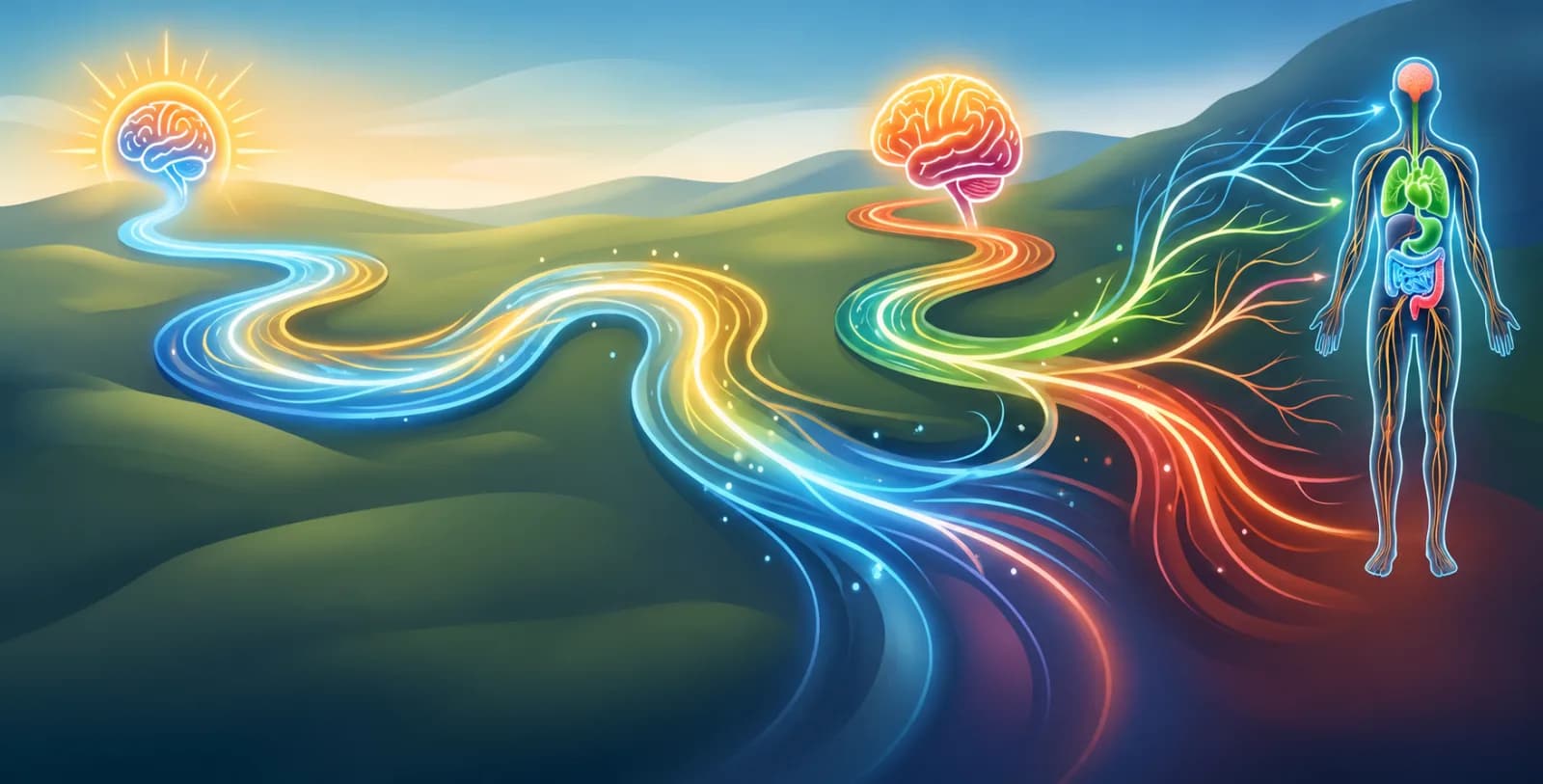
These are common patterns, not diagnostic maps. There is no reliable rule that one sensation always means one emotion. A tight chest can have emotional, medical, respiratory, musculoskeletal or other explanations. Persistent, severe or unexplained physical symptoms require appropriate medical assessment.
Body awareness becomes useful when it is approached with curiosity rather than certainty. Instead of deciding, “This tension must mean anger,” it is more accurate to ask: What has changed? When did it begin? What else is happening? What patterns repeat?
Interoception: noticing the internal body
Interoception refers broadly to how the nervous system senses, interprets and integrates signals from inside the body. These signals include processes related to breathing, heartbeat, temperature, hunger, fullness, pain and internal tension.
Bodily changes may be among the earliest cues that an emotional response is developing. A person may notice pressure in the chest or a change in breathing before identifying fear, excitement or sadness.
Interoception is not a perfect emotion detector. People differ in what they notice, how they interpret it and whether bodily sensations feel informative, neutral or frightening. Noticing the body can offer useful information, but it should not be used to diagnose an emotion or assign fixed meanings to particular body areas.
Why emotions can be difficult to identify
Not everyone has easy access to emotional language. Some people recognise bodily discomfort but cannot connect it with a feeling. Others understand emotions intellectually but struggle to notice them in real time. Some rely on broad descriptions such as stressed, fine, bad or overwhelmed.
Emotional awareness develops through language, relationships, cultural learning and repeated opportunities to notice and discuss internal experience. Family rules, chronic stress, professional roles, neurodevelopmental differences and earlier experiences may all influence this process.
Alexithymia describes a pattern involving difficulty identifying or describing emotional experiences and, for some people, a more externally focused style of thinking. It does not mean that a person has no emotions. It describes difficulty accessing, differentiating or communicating them.
Difficulty naming emotion should therefore be approached as a pattern to understand, not a personal failure. Emotional vocabulary and awareness can often become more precise through education, reflection, supportive relationships and psychological work.
The seven emotional families used at RelaxIOhub
For public education, RelaxIOhub organises emotional experiences into seven broad families. This is a practical map rather than a claim that emotion science agrees on one universal list.
- Fear and uncertainty: fear, anxiety, worry, panic, insecurity, helplessness and uncertainty.
- Anger: anger, irritation, frustration, resentment, bitterness, rage and indignation.
- Sadness: sadness, grief, loneliness, disappointment, longing, emptiness and heartbreak.
- Shame and guilt: shame, guilt, embarrassment, regret, remorse, inadequacy, humiliation and self-blame.
- Joy and connection: joy, contentment, love, gratitude, hope, pride, excitement, relief and tenderness.
- Disgust and aversion: disgust, contempt, repulsion, distrust, moral outrage and aversion.
- Surprise and orientation: surprise, curiosity, confusion, overwhelm, shock and disorientation.
The value of emotional families is practical. They provide a starting vocabulary while leaving room for emotional blends, cultural variation and individual differences.
A person may feel relief and sadness together. Love may coexist with fear and uncertainty. Pride may be accompanied by embarrassment. Emotional complexity is normal, and a single label does not have to capture the whole experience.
Emotional awareness is different from emotional control
People often learn that emotional regulation means calming down, thinking positively or making an unpleasant feeling disappear. Regulation is broader than this.
Emotion regulation includes the ways people influence which emotions arise, how intensely they are experienced, how long they last and how they are expressed. Sometimes regulation means reducing activation. At other times it means allowing sadness, sustaining motivation, communicating anger constructively or staying present with uncertainty.
Awareness comes before flexible regulation. It is difficult to choose a response when the experience has not been noticed, named or understood. This is why RelaxIOhub begins with noticing and understanding before moving toward regulation.
Suppression can sometimes be useful in a short-term context. A person may need to postpone expression during an emergency, a work meeting or a situation in which it would not feel safe. But repeatedly pushing emotion away is not the same as processing or regulating it. The most helpful strategy depends on the person, the emotion and the situation.
Can emotions become “stuck” in the body?
People sometimes describe an emotion as feeling “stuck in the body.” The phrase can capture a genuine subjective experience: tension remains, breathing feels restricted, sleep is disturbed or the body does not seem to settle after a difficult period.
The phrase should not be interpreted literally as an emotion stored inside a muscle or tissue. A more accurate explanation is that patterns of physiological activation, attention, behaviour and muscle use may continue and become familiar, especially when stressors persist or opportunities for recovery are limited.
Some people may then notice ongoing muscle guarding, altered breathing, disrupted sleep, digestive changes, fatigue, irritability or reduced body awareness. These experiences are influenced by many factors and should not be attributed automatically to emotion.
Understanding the emotional experience is one part of recovery. The body may also benefit from opportunities for rest, movement, breathing, safe touch and gradual return toward baseline.
Where psychology and body-based support meet
Psychological work can help people identify emotions, examine meanings, recognise maintaining patterns, communicate more clearly and develop more flexible responses.
Movement and exercise can support physical health, sleep, energy, confidence and recovery after stress. Massage may support comfort, relaxation and awareness of areas that have remained tense or guarded. Breathing practices may help some people notice and influence patterns of activation.
These approaches do not perform the same role. Massage does not replace psychological processing. Psychology does not replace medical investigation or physical rehabilitation. Exercise is not a universal treatment for emotional distress.
The strongest position is complementary: use the form of support that fits the question being addressed and involve appropriately qualified professionals when needed.
A practical way to begin noticing emotions
Emotional awareness does not require finding the perfect label immediately. It can begin with a slower sequence of questions:
- What changed in my mood, attention, energy or body?
- What happened before I noticed this change?
- Which broad emotional family might be present?
- What action do I feel pulled toward?
- What does this experience seem connected with?
- What additional information do I need before deciding how to respond?
The purpose is not to analyse every moment. It is to develop enough awareness to recognise recurring patterns and create a little more space between emotion and response.
Over time, emotional vocabulary may become more precise. “Bad” may become disappointed, ashamed, lonely or frustrated. “Stressed” may separate into fear, pressure, anger, helplessness or exhaustion. Greater precision can make communication and support more effective.
When professional or medical support may help
Professional psychological support may be useful when emotions feel persistently overwhelming, difficult to identify, closely connected with repeated relationship problems, or associated with avoidance, shutdown or reactions that interfere with daily life.
Medical assessment is important for new, severe, persistent or unexplained physical symptoms; significant changes in sleep, appetite or energy; chest pain; breathing difficulty; fainting; neurological symptoms; or any concern that may require healthcare evaluation.
Seeking support does not mean an emotion is wrong. It may simply mean the experience is difficult to understand or carry alone.
Reflection
Key takeaways
- Emotions involve the mind, nervous system, body and context.
- They provide information, but they do not dictate behaviour.
- An emotion can serve an understandable purpose without being accurate in every situation.
- Body sensations can contribute to emotional awareness, but they are not diagnostic maps.
- Emotional awareness develops through noticing, naming, understanding and connecting experience.
- Regulation is not the same as suppression or forced calm.
- Psychology, movement, massage and medical care can play complementary but distinct roles.
Understanding creates choice
Emotions are not interruptions to an otherwise rational life. They are part of how people notice significance, prepare for action, learn, connect and make decisions.
They can be useful without being infallible. They can influence the body without providing a medical diagnosis. They can deserve attention without requiring immediate action.
Emotional literacy grows when people learn to notice, name, understand and connect their experiences. Regulation then becomes less about forcing emotion away and more about choosing a response that fits the present situation.
Understanding does not remove every difficult feeling. It makes the experience more coherent. And coherence creates more room for choice.
Scientific foundations and selected references
- Barrett, L. F. (2017). The theory of constructed emotion: An active inference account of interoception and categorization. Social Cognitive and Affective Neuroscience, 12(1), 1-23.
- Gross, J. J., & Barrett, L. F. (2011). Emotion generation and emotion regulation: One or two depends on your point of view. Emotion Review, 3(1), 8-16.
- Khalsa, S. S., et al. (2018). Interoception and mental health: A roadmap. Biological Psychiatry: Cognitive Neuroscience and Neuroimaging, 3(6), 501-513.
- Keltner, D., et al. (2019). What basic emotion theory really says for the twenty-first century study of emotion. Journal of Nonverbal Behavior, 43, 195-201.
- Mauss, I. B., & Robinson, M. D. (2009). Measures of emotion: A review. Cognition and Emotion, 23(2), 209-237.
- Price, C. J., & Hooven, C. (2018). Interoceptive awareness skills for emotion regulation: Theory and approach of mindful awareness in body-oriented therapy. Frontiers in Psychology, 9, 798.
- Tyng, C. M., et al. (2017). The influences of emotion on learning and memory. Frontiers in Psychology, 8, 1454.
- Van Bael, K., et al. (2024). The relationship between self-reported interoception and alexithymia: A systematic review and meta-analysis. Neuroscience & Biobehavioral Reviews.
This article is educational and does not provide diagnosis or medical advice. Bodily sensations and emotional changes can have multiple explanations. Persistent, severe or unexplained symptoms should be discussed with an appropriately qualified healthcare professional.